Dustin’s Success Story
When Dustin walked out of prison in 2024, he had one goal: get back to his three kids. What he didn’t know yet was that a Goodwill Career Center and a program called Careers on the Outside would help him create the life he always wanted; a good one.
Before incarceration, Dustin had built a strong professional career. For 16 years he worked at Lowe’s Foods, spending 12 of those as the lead call center representative at their Winston-Salem location scheduling staff, supervising colleagues, and serving as the escalation point for the entire team. He was, by any measure, a skilled and experienced professional.
But after his release, those qualifications weren’t enough to get past the background check. For four months, Dustin applied for job after job. He got the callbacks. He aced the interviews. He even received three formal job offers from call centers who recognized his talent, only for those offers to evaporate once the background check came back. One employer told him directly: “We still want to offer you the job,” but their third-party screening process said otherwise.
Every day at the halfway house in downtown Greensboro, Dustin was at the computer, firing off a dozen applications. He kept applying because giving up wasn’t an option — he had three children who hadn’t seen their father in four and a half years.
“I came out of prison to three kids I hadn’t seen in four and a half years. It wasn’t an option for me to give up.”
Dustin’s case manager at the halfway house knew he was qualified and persistent. They sent him to the Triad Goodwill Career Center, initially to sharpen his resume. While there, staff encouraged him to sign up for any programs that interested him. Careers on the Outside (COTO) caught his eye.
Emily reached out, sat down with Dustin, and walked him through what COTO could offer. He enrolled. And before the class was even finished, Dustin had a job offer from Triad Goodwill’s own e-commerce team.
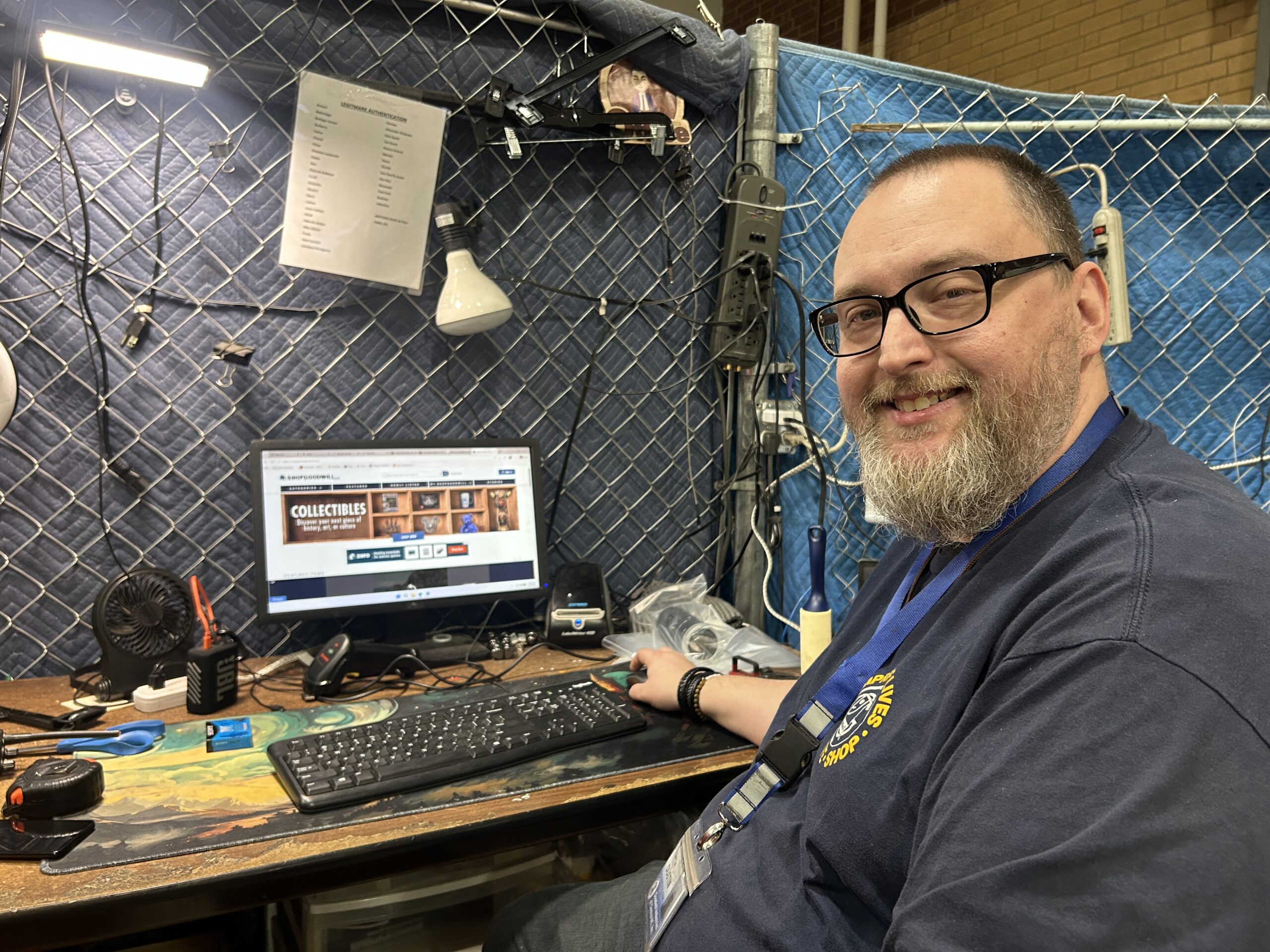
Nearly two years later, Dustin is an e-commerce associate who has cross-trained across the entire department. Listing, photography, and quality control, he loves all of it. “Knowing how to do one informs knowing how to do the other,” he says. “If you’ve been a lister, you know what photos you need. So when you’re a photographer, you already know what to take.” But what keeps him coming in every morning is something deeper than the job itself.
“Knowing that my work impacts someone who really needs a hand, just like I did. That’s what does it for me,” he says. When I come in every day, knowing that if I show up, we have a little bit more to help those people who were in my spot.”
Dustin is candid about who he was before. He struggled with severe depression and anxiety, debilitating enough that he frequently missed work and found it hard to get out of bed. Today, he says he doesn’t feel any of that. Prison, the COTO program, and the process of rebuilding forced him to learn how to manage those emotions in ways he never had before.
Asking him to describe himself now in three words, Dustin answers without hesitation: determined, grateful, and good. That last one carries the most weight.
“For a lot of my life, being a good man was the one thing I was trying to get to and just never could,” he reflects. “Hitting rock bottom, being able to build back to what I want my future to be, to seeing that there would be a future. I feel like I’ve come to a point where I am a good man. I can say that about myself.”
The list of what Dustin has reclaimed is long. He has rebuilt his relationships with all three of his children ages 15, 11, and 10, and has a fourth daughter due in the summer. He’s spent two precious years with his 92-year-old grandmother, whom he feared he’d never see again. He’s in a fulfilling relationship. He has a stable job he believes in.
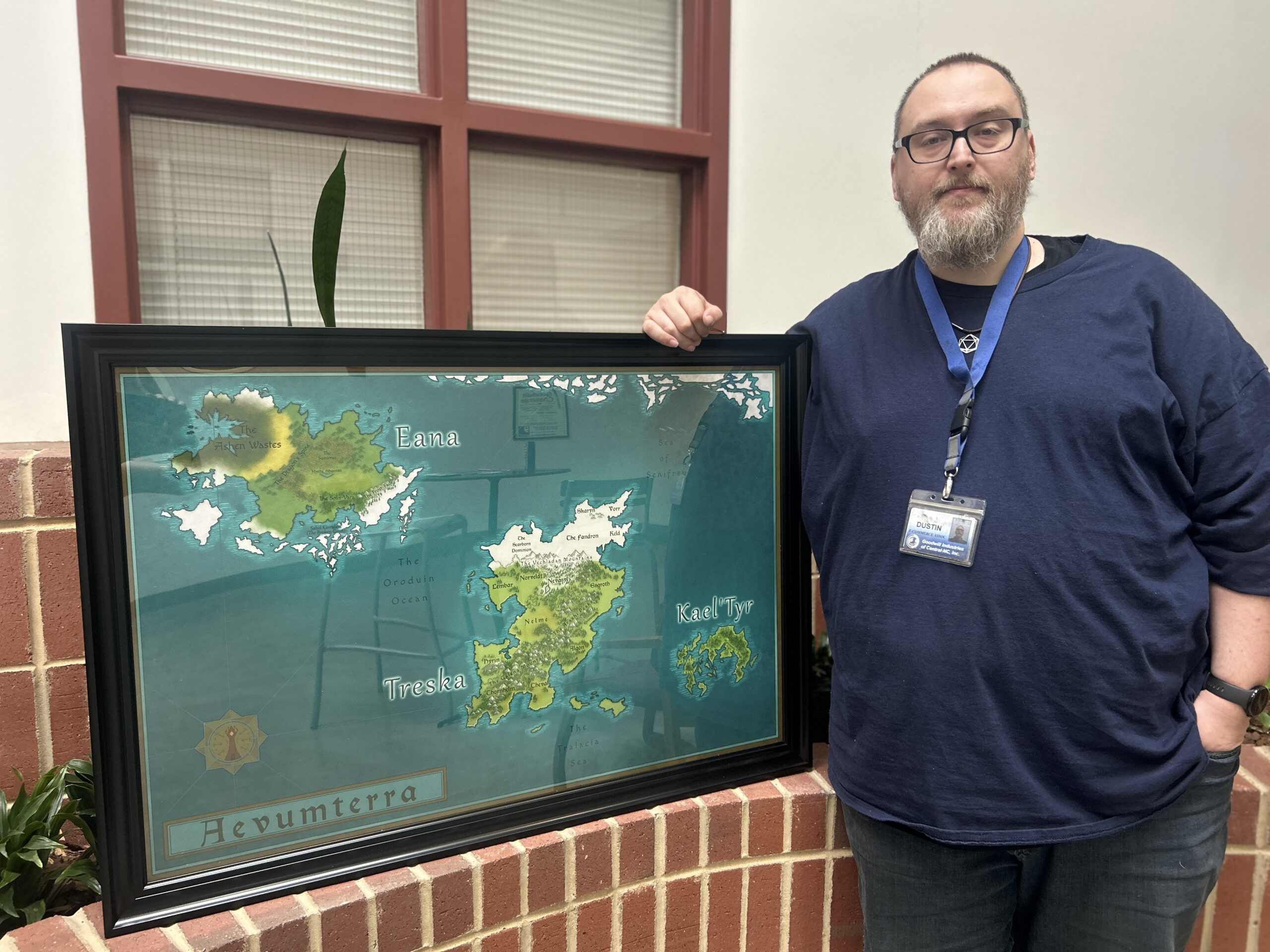
He’s also launched a side business drawing fantasy maps for authors or other creatives – a lifelong passion and talent he’s turned into a business. Clients bring him their ideas for fictional worlds, and he brings them to life as detailed illustrations.
His goals have shifted, too. The ambitions of his old life, wealth, big houses, travel, don’t interest him anymore. “I care about just having a good life,” he says. “A content life. That’s more what my goals are now.”
Dustin is now part of a therapy group with others navigating similar circumstances, and he consistently gives them one piece of advice: come to the Goodwill Career Center. Talk to Emily. Talk to Kelly. Get plugged in.
Beyond that, he urges people not to let months of rejection push them back toward old habits. “Just buckle down, commit, and keep plugging away,” he says. “Someone is going to give you that chance.”
And to employers who are still on the fence about hiring someone with a background, Dustin has a message:
“You’re focused on the so-called risks and missing the obvious benefits. The motivation to show up and do good work, is not just a work ethic thing. For people in my position, we’re done with what put us away. Now we’re focused on getting our lives back together. That’s the kind of employee I’d want.”